

· AFX Research
What Is a Current Owner Search? The Report, Explained
A plain-English walkthrough of every finding in a current owner search report: vesting, the last deed of transfer, open mortgages, liens and judgments, tax status, and the legal description.
Table of Contents
Before money changes hands on a property, one question matters more than any other: who actually owns it, and what claims stand against it? A current owner search (you’ll also hear “O&E report,” for ownership and encumbrance) answers exactly that, straight from the county record.
It’s the workhorse report of real estate due diligence: faster and less expensive than a full historical search, and sufficient for most transactions where you need to verify the present owner and surface anything recorded against them.
Current vesting
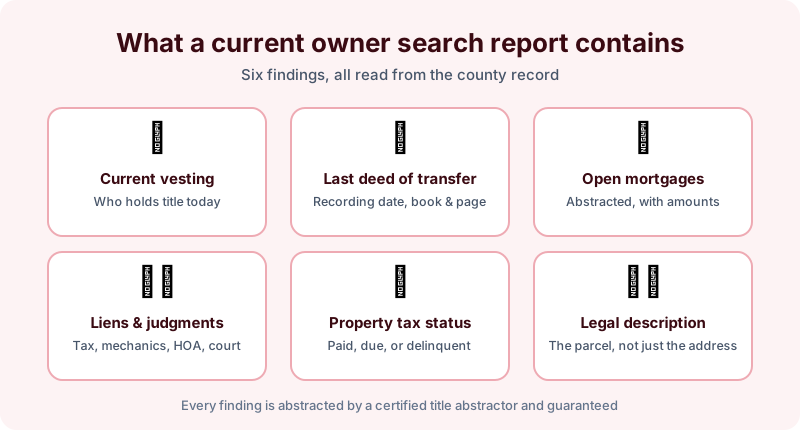
The report confirms how title is held today: the exact name (or names) on record, and how they hold it. This is where surprises hide: property vested in a family trust, an LLC, an estate that never completed probate, or a co-owner nobody mentioned. If the name on record doesn’t match the person you’re dealing with, you want to know before closing, not after.
The last deed of transfer
Every current owner search is abstracted back to the current owner transfer: the most recent deed that put the present owner on title, with its recording date, book, and page. That anchor document is what separates a genuine title search from a data-broker lookup — it’s read from the county record, not scraped from an aggregator.
Open mortgages
Any deed of trust or mortgage recorded against the current owner is abstracted with its amount. That includes the loans people forget to mention: home equity lines, second mortgages, and private-party loans. For anyone lending against the property, this is the lien stack your position depends on.
Liens, judgments, and other encumbrances
The search covers the involuntary claims too: federal and state tax liens, mechanics liens, HOA liens, and court judgments that have attached to the property. Each open item is listed with its recording information and amount, so payoff planning can start immediately. (We wrote up the most common finds in the usual suspects a search catches before closing.)
Property tax status
Unpaid property taxes follow the property, not the seller. The report shows the current tax status — paid, due, or delinquent — so a back-tax bill never lands on the new owner’s doorstep.
The legal description
Finally, the report includes the property’s full legal description: the lot-and-tract or metes-and-bounds language that defines the parcel itself. Street addresses are ambiguous; legal descriptions aren’t. Verifying it against the recorded deed ensures the property you’re researching is the property you’re buying.
What a current owner search is not
A current owner search focuses on the present owner’s period of ownership. It doesn’t trace decades of prior transfers — that’s a full chain of title search, a deeper (and slower) product for when history matters. And a search report is not title insurance; it’s the factual research that tells you what’s on record right now.
The takeaway
One report answers the questions that sink deals: who owns it, what they owe against it, whether the taxes are paid, and whether the parcel is what everyone thinks it is. Every AFX Research current owner search is performed by a certified title abstractor and guaranteed — see what’s included in our report, or order yours online in a few minutes.