

· AFX Research
Current Owner Search vs. Full Chain of Title: Which Do You Need?
Both reports read the same county records — the difference is depth. How to choose between a current owner search and a 30-60 year chain of title, with the cases where each one wins.
Table of Contents
Order a title search and you’ll immediately hit a fork in the road: a current owner search or a full chain of title. Both are real searches of the county record, performed the same way. The difference is how far back they go — and that difference drives cost, turnaround, and what questions each report can answer.
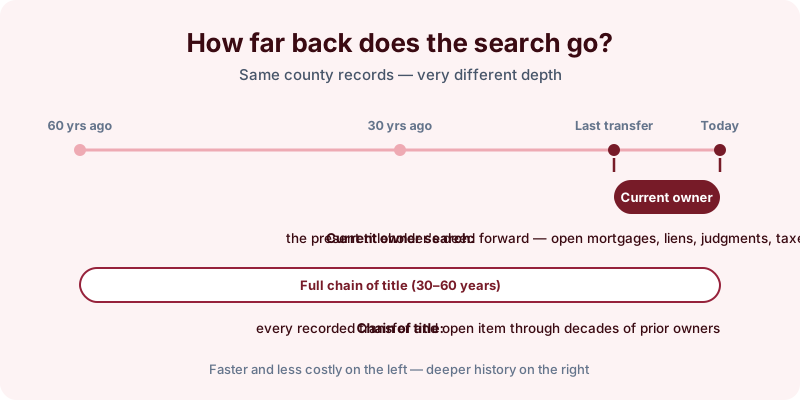
The current owner search: today’s answer, fast
A current owner search starts at the most recent deed of transfer — the document that put the present owner on title — and works forward to today. Within that window it abstracts everything: the vesting, open mortgages, liens, judgments, tax status, and the legal description.
Because the window is narrow, the report is fast and economical. It’s the standard choice for:
- Buying at auction or from a wholesaler — you need to know what debt survives the sale, this week.
- Private and hard-money lending — the lien stack against the current owner is what your position depends on.
- Pre-listing and pre-offer due diligence — confirm the seller actually holds title and what has to be paid off.
- Portfolio and REO reviews — a snapshot of encumbrances across many properties, quickly.
The full chain of title: decades of history
A chain of title report walks the ownership history back 30-60 years, transfer by transfer. Each deed is verified against the next, so breaks in the chain — a missed heir, a misindexed document, a deed that was never recorded — come to the surface, along with old items that were never properly released.
That depth is the point. Reach for a full chain when:
- A lender or agency requires it — many underwriting standards (including SBA programs) specify a multi-decade search.
- Title insurance is being written — the underwriter needs the history, not just the snapshot.
- Something already looks wrong — conflicting deeds, a quiet-title action, a boundary or easement dispute.
- The property has a complicated past — foreclosures, estate transfers, or long gaps between recordings.
The practical difference
| Current owner search | Full chain of title | |
|---|---|---|
| Depth | Last transfer → today | 30-60 years of transfers |
| Answers | Who owns it now, what’s owed against it | How title got here, and whether the chain holds |
| Speed | Most in 1-3 business days | Days, varies by county and history |
| Typical use | Purchases, lending, due diligence | Underwriting, insurance, disputes |
When in doubt
Start with what the report has to prove. If the question is “can I safely transact with the person on title today?”, the current owner search answers it — and 75% of ours come back in under a day. If the question is “is this title sound all the way down?”, order the chain.
And if the property doesn’t fit a simple residential profile — commercial, multi-parcel, mineral rights — talk to us or browse the full range of current owner search products on our corporate storefront. We’ll scope the right search the first time.