

· AFX Research
Title Search When the Seller Is Overseas
A seller abroad can convey perfectly well, but the deed has to be acknowledged in a form your recorder accepts. What the search should surface about authority, and why the signing logistics decide the closing date.
Table of Contents
A seller living abroad is an ordinary situation with an unordinary paperwork path. The conveyance itself is straightforward. What takes time is getting a signature acknowledged in a form the county recorder will accept, and what creates risk is the power of attorney that frequently gets used instead.
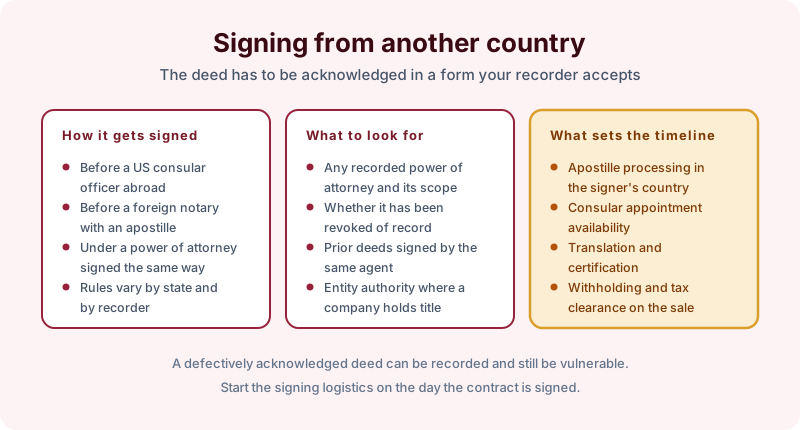
How a deed gets signed abroad
Three routes. Before a US consular officer at an embassy or consulate, which produces an acknowledgment every US recorder accepts. Before a foreign notary with an apostille attached under the Hague Convention, which most states accept. Or under a power of attorney executed by one of those two methods, with an agent signing in the United States.
Which routes work depends on the state and occasionally on the individual recorder. Confirm before anyone books an appointment.
What the search should surface
A recorded power of attorney and its scope — whether it authorizes the sale of this property, or real estate generally, or only a specific transaction. Whether anything revoking it has been recorded. Prior deeds signed by the same agent, which tell you the arrangement has worked before.
Where an entity holds title, the authority question shifts to corporate documents rather than a POA, and the search establishes which entity is actually on the deed. The underlying analysis is the one in power of attorney deeds and your title search.
The defects that matter
A defectively acknowledged deed can be recorded and still be vulnerable, because recording does not cure an execution problem. An apostille attached to the wrong document, a notary acting outside their authority, or an acknowledgment in a form the state does not recognize all produce an instrument that looks fine in the index.
A stale power of attorney is the other recurring problem. A POA terminates on the principal’s death and in many states on incapacity, and neither event gets recorded. A deed signed under a POA after the principal died conveys nothing.
What sets the timeline
Apostille processing in the signer’s country, which ranges from days to months. Consular appointment availability, which in some posts runs weeks out. Translation and certification where documents are not in English. And withholding or tax clearance obligations on a sale by a non-resident, which are a tax matter rather than a title one and routinely delay funding.
What to order
A full search on the parcel, plus a specific request for any recorded power of attorney or revocation. Ask for the instruments in full rather than index abstracts, since an acknowledgment defect is only visible on the face of the document.
A records search reports what was recorded and indexed as of the day it was run. It does not establish that a signature was validly taken, that a principal was alive, or that a foreign document was properly authenticated.
The bottom line
Start the signing logistics the day the contract is signed, and have the search confirm the authority documents before anybody flies anywhere. See the full range of searches and order online, or ask us how to scope a transaction with a seller abroad.