

· AFX Research
Title Search for a Property With a Cell Tower Lease
A tower on the land usually means a lease, an access easement, and rent that somebody may already have sold. What the county record shows about all three, and why the memorandum you find is not the document you need.
Table of Contents
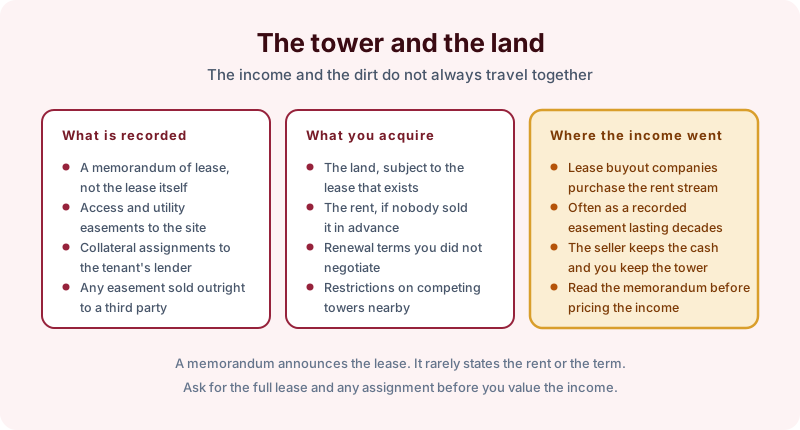
A parcel with a cell tower on it comes with an income stream that buyers price into the offer, and quite often that income no longer belongs to the land. Lease buyout companies purchase the rent stream, frequently recording it as an easement that runs for decades, and the seller keeps the cash while the buyer inherits the tower. Establishing which of those you are buying is the point of this search.
What appears in the record
Almost never the lease itself. What gets recorded is a memorandum of lease — a short instrument announcing that a lease exists, identifying the parties and the leased area, and usually saying nothing about rent, escalators or term length.
Alongside it you will typically find access and utility easements reaching the tower compound, which can cross a substantial part of the parcel. You may also find a collateral assignment to the tenant’s lender, and in some cases an easement conveying the rent stream to a third party entirely.
What you are actually acquiring
The land, subject to whatever lease exists. The rent, if nobody sold it in advance. Renewal terms you did not negotiate, which on tower leases frequently extend the arrangement well past any horizon a buyer is thinking about.
And restrictions. Many tower leases prohibit the landowner from permitting a competing tower or antenna anywhere on the property, which constrains future development in ways the deed does not disclose.
The question that decides the price
Whether the rent was sold. A recorded easement in favor of a lease buyout company is the tell, and it is easy to skim past because it looks like an ordinary utility easement. Read the instrument rather than the index entry — the same discipline described in how to read a title search report.
Where the rent has been sold, the buyer gets a tower, an access easement across the land, a restriction on competing installations, and no income at all.
Two other things worth checking
Who the tenant actually is. Tower leases have been assigned repeatedly as carriers sold their infrastructure to independent tower companies. The entity on the original memorandum may have nothing to do with the entity paying rent today, and the assignment chain is recorded.
Whether the compound was surveyed out. Some tower sites are described by a metes and bounds exhibit and some are described loosely as an area “in the northeast corner.” A vague description becomes a real problem when the parcel is later subdivided or financed.
What to order
A full search on the parcel, with the recorded instruments returned in full rather than summarized. Then ask the seller for the complete lease, any amendments, any assignment, and an estoppel from the tenant confirming the rent and the term.
A records search reports what was recorded and indexed as of the day it was run. It does not report the rent, the escalator, or whether the carrier intends to renew.
The bottom line
The memorandum tells you a lease exists. The lease tells you what it is worth, and an assignment tells you whether it is yours. Get all three before pricing the income. See the full range of searches and order online, or ask us what scope fits the parcel.